Liberal Democrat

Liberal Democrat
Father of American Liberalism
Showing posts with label The Fiscal Times. Show all posts

Tuesday, August 12, 2014

The Fiscal Times: John Grgurich: U.S. Economy Grows Better Under Democratic Presidents: Is That Good Luck or Good Policy?


Source:The New Democrat

I know this is going to sound like a copout and trying not to take a hard stand and everything else, but the answer to why the American economy does better under Democratic presidents than Republican presidents to put it simply, is both. Democratic presidents tend to have better economic policies which I'll get to later than Republicans. And when a Democrat is President a lot of times they become President just right before the economy is about to take off. Jack Kennedy, Lyndon Johnson, Bill Clinton are perfect examples of that. Harry Truman would be another one and Barack Obama and Jimmy Carter are unfortunately the exceptions to that.

As far as policies Democratic presidents both liberal and progressive tend to want an economy that works for everyone. Sure Republican presidents I'm sure believe in the same thing. But Democrats put in the policies that make that economy come about. Which is why they focus so much on education, infrastructure, job training for low-income workers and unemployed workers whether they are educated or not, encouraging companies to invest in low-income areas.

Republicans tend to believe in what George H.W. Bush called when he ran for president in 1980 'Voodoo Economics', that some others call Trickle Down Economics. "You cut regulations and taxes for employers and individuals and the economic activity that will come from those business's and individuals that now have that extra money will now be invested in other business's and that economic activity will benefit everyone as a whole". That is the theory anyway, but the results have been at best mixed for thirty-five years or so ever since the policy was introduced in Congress by then Representative Jack Kemp and Senator Bill Roth.

As far as the lets say good luck, yes Democratic presidents have inherited economies that were just about to take off. Bill Clinton comes to mind in 1993 with the Cold War just ending and with the start of the Information Technology Revolution just getting under way around 1990-91 with all of the cell phones and laptop computers now online and of course the internet just getting under way. The Clinton White House had their own web site under way from the start and had email as well.

So yes Democratic presidents happen to of become President when the economy is just about to boom. But they've also have pushed policies that empowers all workers to be able to take advantage of economic booms. Economic booms do nothing for people without the skills to take advantage of them. Which is why education is always so critical for any economy to do well. And Democrats tend to push those polices more than Republicans.

Wednesday, June 25, 2014

The Fiscal Times:Rob Garver: Senate Alums Have a Plan to Fix Our Broken Congress

There really isn't any plan that would fix our U.S. Congress that is so unpopular that only its members, family and staff for the members and perhaps some mental patients approve of the job that it is doing. First of all which might seem foreign to Europeans and social democrats in America is that we have a bicameral Congress with a House and Senate. That is right we do not have a Congress and a Senate which some on the Left (MSNBC comes to mind and others) do not seem to understand. And they are independent of each other and have to work with each other to pass laws out of Congress.

Which means the House would have to fix itself and the Senate the same for Congress as a whole to be fixed. And in the future this blog may propose to plan to do both. But what Congress can do together is pass laws regulating how its members are elected.

Like taking the responsibility away from state legislatures in how House districts are drawn. Not taking the power away from the states or the legislatures completely. But giving state elections commissions to the authority to draw up districts. And not draw them up to favor any political party. But draw them up that represents the state as a whole. So Republicans or Democrats wouldn't have more House districts because their party controls the state house and the legislature. Because now those seats would be drawn based on party membership of the state. Not based on which party currently controls the state. These commissions would make their suggestions. The legislature and governor would have to approve them to become law. And then the Federal Election Commission would have to approve them as well to make sure they are consistent with party registration of the states.

Another idea would be full-disclosure that would cover all political contributions. Whether they are given to incumbents, candidates or third-party groups. All contributions would have to be fully-disclosed the amount of money that is given, plus by which individual or group gave the money.

These are some of the things that Congress the House and Senate could do working together could do to fix Congress. Because their members would be less willing to take money from groups that are controversial and feel the need to hide. But also less willing to be associated with them in third-party groups like when one of these groups runs an ad against their opponent. But House districts would now be drawn in a way where they are less partisan. And where the representative would be representing a more diverse population without the ability to take such partisan stances on issues. Because it could cost them politically.

Monday, June 16, 2014

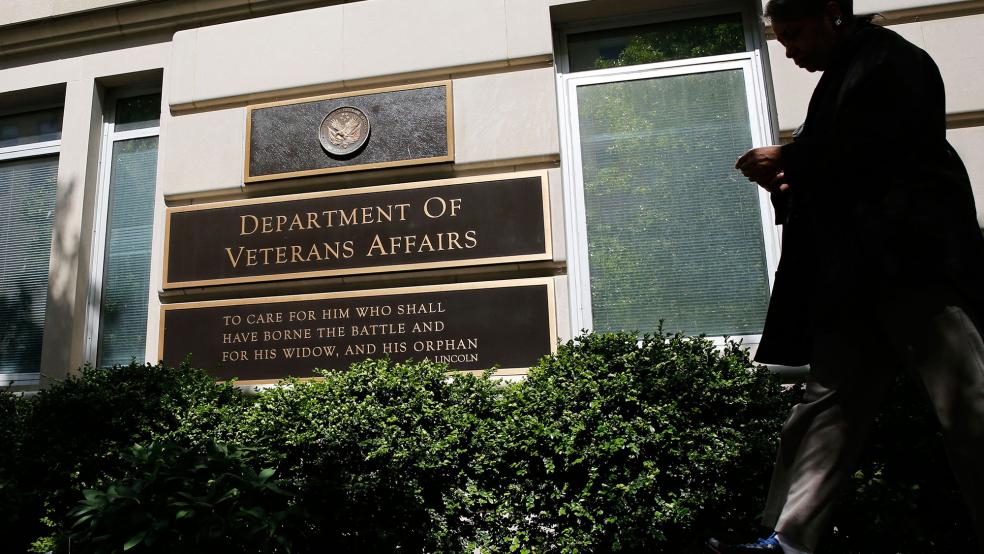
The Fiscal Times: Edward Morrissey: 'The VA Scandal Exposes Single Payer Flaws'

Source:The Fiscal Times- U.S. Department of Veterans Affairs.
Source:The New Democrat

In case there wasn’t already enough evidence that America will never have a Scandinavian or British style government run health care system that includes both health insurance and health care the scandal at the U.S. Veterans Administration and failing to provide our military veterans the health care that they deserve is the ‘smoking gun’. 

Monopolies public or private for-profit or non-profit which is what the VA health care system is a public non-profit health care system they do not work for the simple reason that their patients or customers do not have other options. So whether these services do a good job or not they are guaranteed of staying in business and continuing to operate regardless of the service that they perform. Which means they do not have the incentive that frankly most Americans need whether we work in the public or private sectors to do a good job. Because they know they’ll most likely always have a job working for that monopoly. Unless they are caught doing something so horrible that embarrasses the agency that they work for. 

But that is just one problem with the VA health care monopoly. The other one having to do with the fact that since they are the only game in town when it comes to veterans health care and since this country has essentially been at war since 2001 now they have a lot more customers or veterans they are simply responsible for. And because of that are probably overwhelmed with the services they have to provide. 

It seems to me at least to be basic commonsense to allow Americans who’ve risked their lives for their country and ours to simply have freedom of choice in where to get their health care. And both Congressional veterans health care reform bills provide at least some of that choice for where our veterans can get their health care in the future. The VA, or a public non-federal hospital, or get their health care from the private sector. 
Source:CBS News

Wednesday, February 12, 2014

The Fiscal Times: Mark Thoma: How Keynes Would Handle An Abnormally Slow Recovery


I'm all in favor of trying to boost economic and job growth when the economy is weak with something like a new national infrastructure plan, a National Infrastructure Bank. But when you have a national debt as high as your Gross National Product, I mean 17 trillion dollars is one figure. I bet most Americans have a hard time getting their fingers around the total size of the American economy as well as national debt, and when it is that high it blows their minds. Your credit card bill is due and to keep what you need to pay back from getting even further out of hand you at least have to start paying some of that back to keep your credit from being ruined altogether.

We have a financial deficit, an infrastructure deficit, an energy deficit, a manufacturing deficit, and a tax deficit. Our corporate tax system is not competitive with a lot of the developed world. When your economy is just barely over the water, that is the perfect time to fix all of those things. But do it in a fiscally responsible way so you don't make your current financial situation any worse than it is or it has to be and, yes, interest rates are low right now but artificially low because of the Federal Reserve decisions, not because of any real strength in the economy.  So:

1. Let's encourage more corporate and other business-related investment in the United States, including manufacturing and energy.

2. Let's start rebuilding this country with a National Infrastructure Bank.

3. Let's encourage more manufacturing in America and stop encouraging companies to send jobs overseas.

4. Let's create a plan to move America toward energy independence by producing America's energy across the board, at least in the short term.

5. And let's have real tax reform so we can lower taxes on the middle class, which would also boost economic growth as well.

But let's pay for all of these policies instead of adding to our national credit card. 


Thursday, January 16, 2014

The Fiscal Times: Eric Pianin: Get Ready For One-Party Rule if GOP Wins The Senate


Source:The New Democrat

I blogged last night that best ways to fix Washington as far as the national political scene goes, is first by fixing Congress. And that starts in the upper chamber the U.S. Senate. The U.S. House of Representatives has a lot of issues as well that contributes to the over partisanship as well. But the Senate is supposed to be that Congressional chamber where both parties are supposed to work together. At the very least get along after both sides get their say and can offer their ideas and plans to address whatever the issues are in the country. And currently the Senate is not like that.

Keep in mind here I’m a proud loyal partisan when it comes to ideas and philosophy Liberal Democrat. And my party is in charge in the Senate and I hope it remains that way in the next Congress as well. So I believe I have some credibility when I talk about too much partisanship in the Senate. Because it is in my party’s best short-term interest to keep things as they are and even advance them. And turn the Senate into the House as far as rules are set up until Senate Republicans win back the Senate.

Senate Minority Leader Mitch McConnell is one of the last people to be talking about too much Senate partisanship. Since he became Minority Leader back in 2007 has utilized every rule known to man, or least people who report on the Senate, to obstruct Senate Democrats and President Obama. And when he was Assistant Majority Leader from 2003-07, he and then Leader Bill Frist used every rule they could find to prevent Senate Democrats the minority party back then from offering amendments and alternatives to bills. And from even being involved in committee hearings. And Congressional conferences between the House and Senate.

But Minority Leader McConnell is right when he says that the Senate has become too much like the House. And it needs to be better and more like the old Senate. Where both sides can offer their own bills and amendments to the issues that the Senate Leader decides the Senate should focus on. The problem that the Minority Leader and why he has a credibility gap on this issue, is that he’s been a big part of the problem. And a big reason why Leader Reid has moved to more majority rule in the Senate. Since Mitch McConnell became Minority Leader back in 2007.


Friday, January 3, 2014

The Fiscal Times: Eric Pianin: The Unintended Consequences of Expanding Medicaid

Source: The Fiscal Times-
Source:The New Democrat

I have a hard time believing that people on Medicaid would end up going to the emergency room more often now that they have health insurance especially for conditions that aren’t emergencies. As this article from The Fiscal Times suggests. And besides even if that is the case why wouldn’t these ER’s just turn these people away or tell them to make an appointment with one of their doctors. And come back tomorrow and if ER’s aren’t allowed to do that, then they should be allowed to.

This whole debate about Medicaid is about the fact that we do not finance it very well. And we do not finance it very well because we do not have a direct revenue source for it. Unlike Medicare and rely on general tax revenue from the Feds and states to pick up the tabs for it. And until recently before the Affordable Care Act the Feds hadn’t been paying their fair share for Medicaid. A public health insurance program that covers low-income Americans. And the Feds haven’t been paying their share under law because of the high costs of Medicaid. But you give Medicaid a direct revenue source and allow each state to run their own Medicaid program and you fix financial problems of it and no longer have states debating whether they afford to expand their Medicaid or not.

The way to fund Medicaid would be to have a payroll tax on it that would be paid for by employers. And workers to not only cover their employees Medicaid insurance, but for unemployed workers as well, or increase what people get on Unemployment and Welfare Insurance to pay for Medicaid as well. And we could also either give our low-income workers and expanded Earned Income Tax Credit to pay for this. Or increase the minimum wage substantially to cover it as well with a break for small employers. And we wouldn’t have to worry about Medicaid financing in the future again.
Source:RW Johnson